
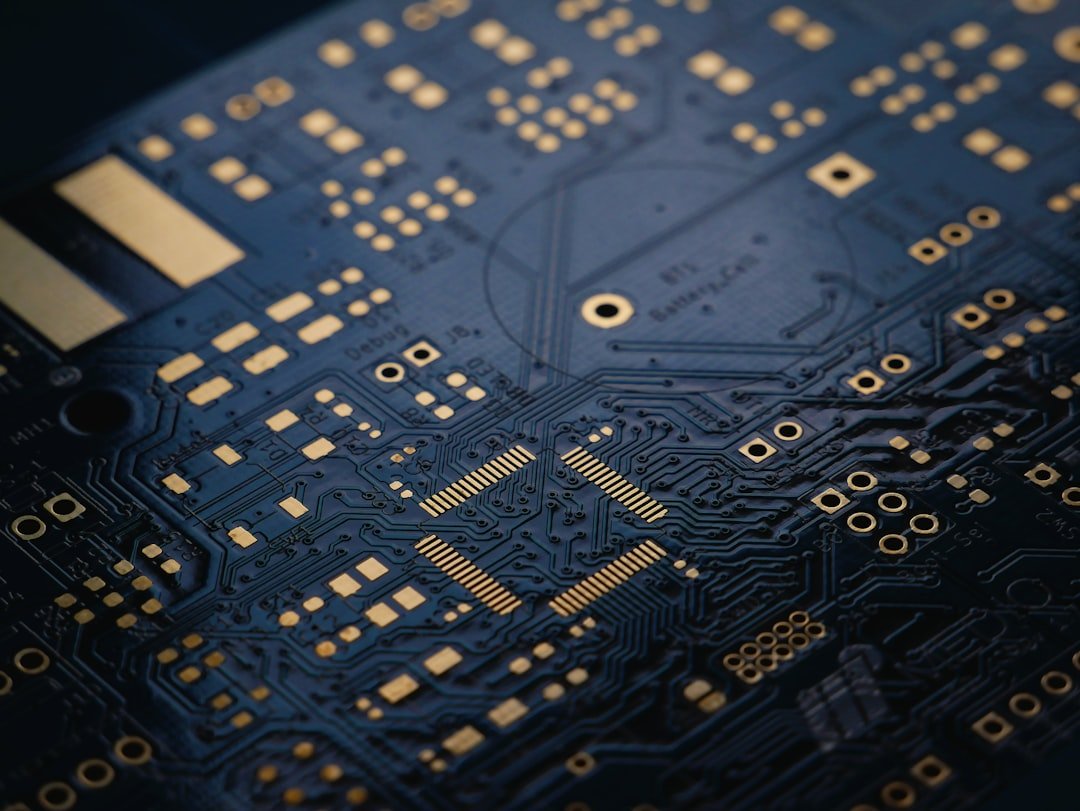
Featured image: Gold contacts on a printed circuit board illustrate reusable electronic hardware. Contextual photograph; not a retired Azure component or a Microsoft Circular Center. Photo: Vishnu Mohanan / Unsplash. Unsplash licence.
A server can leave a cloud operator’s production fleet while still containing useful equipment. What happens next determines whether its value survives as a working computer, a spare component or recovered material.
In a 30 September 2026 update, Microsoft described the hardware lifecycle behind Azure and its Circular Centers. It reported a 92% combined reuse-and-recycling rate for decommissioned servers and components in the preceding year. This is an operator-reported recovery measure, not proof that 92% of retired servers returned to service intact. Read the Azure infrastructure update.
A working component and a recovered material are different outcomes
Reuse preserves a product or component for another job. Refurbishment can prepare it for that job through checks, repair or replacement of worn parts. Recycling instead recovers materials when continued use is no longer practical. Combining these outcomes into one percentage can obscure where the value was retained.
Microsoft describes complete systems going to labs, training environments, educational institutions or qualified buyers. Other components become spare parts, while materials are recycled when reuse is no longer possible. The company reports eight operating Circular Centers, including recent launches in Wales and Australia. Examples of the programme’s recovery routes.
The sensible interpretation is that a structured recovery process exists at substantial scale. The more demanding question is how much functioning equipment it preserves, for how long and in which new applications. Those answers need more detail than a single combined rate.
The environmental benefit depends on what is displaced
The US Environmental Protection Agency explains that electronics contain metals, plastics and glass whose extraction and manufacture require resources and energy. It encourages reuse and upgrading where practical, alongside responsible recycling. Recovering material and extending product life can therefore address different parts of the equipment lifecycle. EPA explanation of electronics reuse and recycling.
For a retired server, the useful comparison is a specific alternative. Does it replace equipment that would otherwise be purchased? Does it become a spare that keeps another machine running? Or does it add a new workload and new electricity consumption that would not otherwise exist?
These are analytical questions, rather than claims about the measured impact of Microsoft’s programme. They show why recovered weight, continued service and avoided manufacturing should be reported separately. A large recovery percentage can be worthwhile without proving a particular carbon saving.
Data security is part of the physical lifecycle
Equipment that stored sensitive information cannot be treated only as a collection of valuable parts. Before reuse or disposal, the organisation must address the data as well as the hardware. Removing a device from a rack is not the same as making the information on it inaccessible.
On 26 September 2025, the US National Institute of Standards and Technology released updated media-sanitisation guidance, SP 800-88 Revision 2. Sanitisation means making access to the target data infeasible for a defined level of effort. The guidance emphasises an organisation-wide programme and methods appropriate to information sensitivity. NIST’s announcement of the updated guidance.
That requirement makes a traceable process important: know which device left service, what data-handling method was used and where it went next. A component’s reuse value and its confidentiality requirements have to be considered together. This is a general lifecycle principle, not a claim that a particular operator uses one prescribed method.
Better reporting follows the equipment into its next job
An informative hardware report would separate whole-server reuse, component reuse and material recycling. It would then describe the expected remaining service life, the energy performance of the next application and the evidence behind any avoided-impact estimate.
It would also clarify the denominator. A percentage measured across decommissioned equipment says something about that flow of hardware; it does not measure every server purchased, every material used or the environmental footprint of an expanding cloud fleet.
The second life of cloud hardware is becoming an operational discipline as infrastructure is refreshed. Its success should be judged through secure handling and useful service, alongside recovery rates. Keeping those measures distinct makes both the achievement and its limits easier to see.
Leave a Reply