

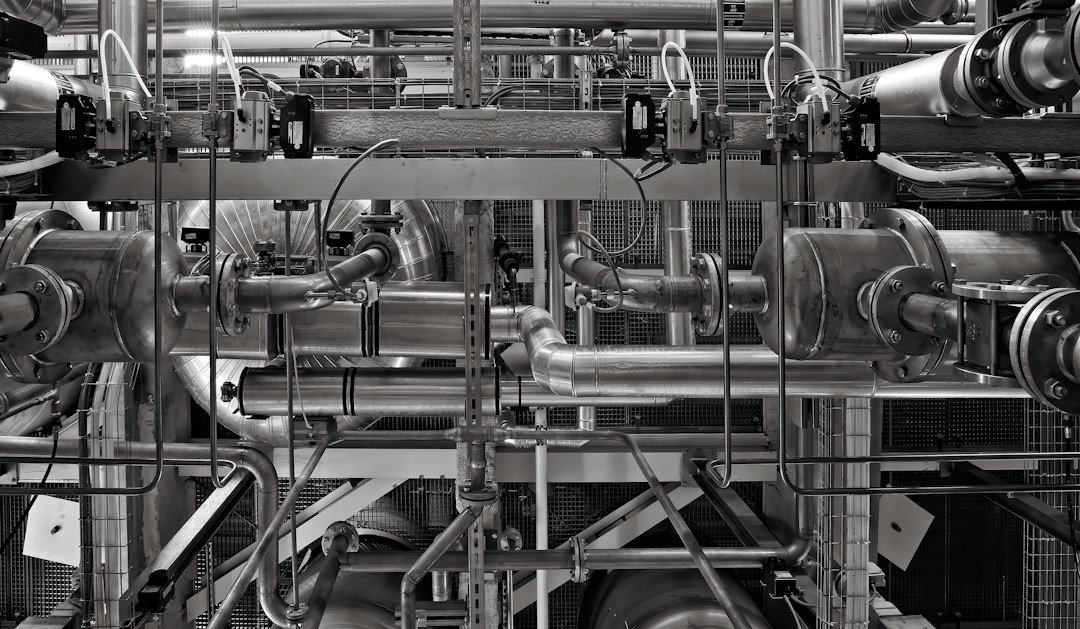
Featured image: A power plant in Germany illustrates electricity-generation infrastructure. Contextual photograph; not a data-centre backup engine or a facility covered by the cited US EPA guidance. Photo: Wim van 't Einde / Unsplash. Unsplash licence.
A data centre’s electricity bill does not describe all the equipment protecting its uptime. Engines held in reserve can keep services running during a supply interruption. When those engines burn fuel, the consequences extend beyond how much electricity the site buys from the grid.
The US Environmental Protection Agency’s stationary-engine overview, updated in March 2026, identifies conventional air pollutants and air toxics from these engines. This explainer examines the engineering and reporting questions raised by backup power. It does not claim that a particular facility has exceeded an emissions limit or caused a measured health effect.
Local emissions need their own account
EPA identifies pollutants including nitrogen oxides, carbon monoxide, volatile organic compounds and particulate matter. These categories concern air quality; they are not interchangeable with an annual carbon accounting figure. The emissions produced at a particular site depend on its equipment and operation, rather than simply the label data centre.
Diesel engines are one relevant example. EPA’s compression-ignition engine page lists the pollutants regulated from that equipment class. Engine characteristics, fuel and controls matter. A claim that electricity is matched with renewable purchases does not, by itself, establish what an on-site combustion engine emits when it runs.
Operating hours change the significance
A useful assessment needs to distinguish installed capacity from actual use. A large fleet held in reserve can have a different annual footprint from the same fleet running frequently. Routine testing, interruptions and participation in power-system programmes are different operating circumstances, and records should identify which occurred.
EPA’s May 2025 backup-generator FAQ describes specific reliability circumstances under which emergency engines can operate for up to 50 hours annually in non-emergency situations. It sets out conditions involving dispatch by relevant system operators, local limitations, protocols and records. It is not a general permission for unrestricted commercial generation.
Avoiding grid strain does not remove the exhaust
Running a site’s own generator can reduce its demand on the grid during an interruption or constrained period. Whether that produces a favourable overall outcome requires a comparison with the realistic alternative. A reduction in grid draw alone cannot establish the net emissions effect or the local concentration of pollutants.
This is an engineering inference, not a measured finding about every backup system. Location, operating duration, controls and the generation displaced all affect the comparison. The same action can improve continuity of service while introducing a separate air-quality consideration. Both effects belong in an honest account of the facility.
Islanded generation is a different operating model
On 27 July 2026, EPA announced guidance concerning islanded power generation: facilities not connected to a public grid. Its announcement explains the agency’s interpretation that the Acid Rain Program does not apply to qualifying islanded facilities, and notes that later connection could change that position.
That interpretation addresses a particular programme. It does not demonstrate that islanded power has no environmental impacts or settle every permitting requirement. A continuously operating private power plant should also not be described as a rarely used backup engine. The duty of the equipment is part of the story.
Reliable reporting follows the equipment’s actual job
Clear public reporting would identify the power sources, what is reserved for backup, how often combustion equipment operates and which controls it uses. Where emissions are estimated, the assumptions should be visible. Where local impacts are modelled or measured, that evidence should be distinguished from general statements about sustainability.
Backup power can be valuable infrastructure. The challenge is evaluating its contribution with the same specificity applied to the servers it protects. A clean-electricity claim, an air permit and a successful recovery from an outage each answer a different question. Together with operating data, they form a more complete account of dependable digital services.
For example, two hypothetical sites with identical backup ratings could run their engines for very different periods. Reporting only the installed megawatts would conceal that distinction. Actual operating records make it possible to evaluate the role of the equipment without assuming its name describes how it is used.
Leave a Reply