

AI infrastructure is moving from uniform clusters built for one giant training job towards shared systems running many different workloads. HPE’s latest Private Cloud AI update makes that shift explicit: organisations can now combine NVIDIA H200 accelerators and RTX PRO 6000 Blackwell Server Edition GPUs in the same cluster.
The mixed hardware is only useful if software sends each job to the right place. HPE is pairing it with NVIDIA’s open-source KAI Scheduler, which allocates capacity by project quotas and priorities. The announcement is less about a faster single chip than about keeping an expensive fleet busy without letting one team monopolise it.
Different GPUs for different work
H200 GPUs provide large high-bandwidth memory and are designed for demanding training and inference. RTX PRO 6000 Blackwell Server Edition GPUs target a wider set of enterprise workloads, including inference, retrieval-augmented generation, visual computing and digital twins. A mixed cluster lets an operator match workloads to hardware rather than buying every project the most expensive configuration.
HPE says heterogeneous GPU support and KAI Scheduler are generally available now. That is a product-availability statement from the vendor, not evidence that every workload will become cheaper or faster.
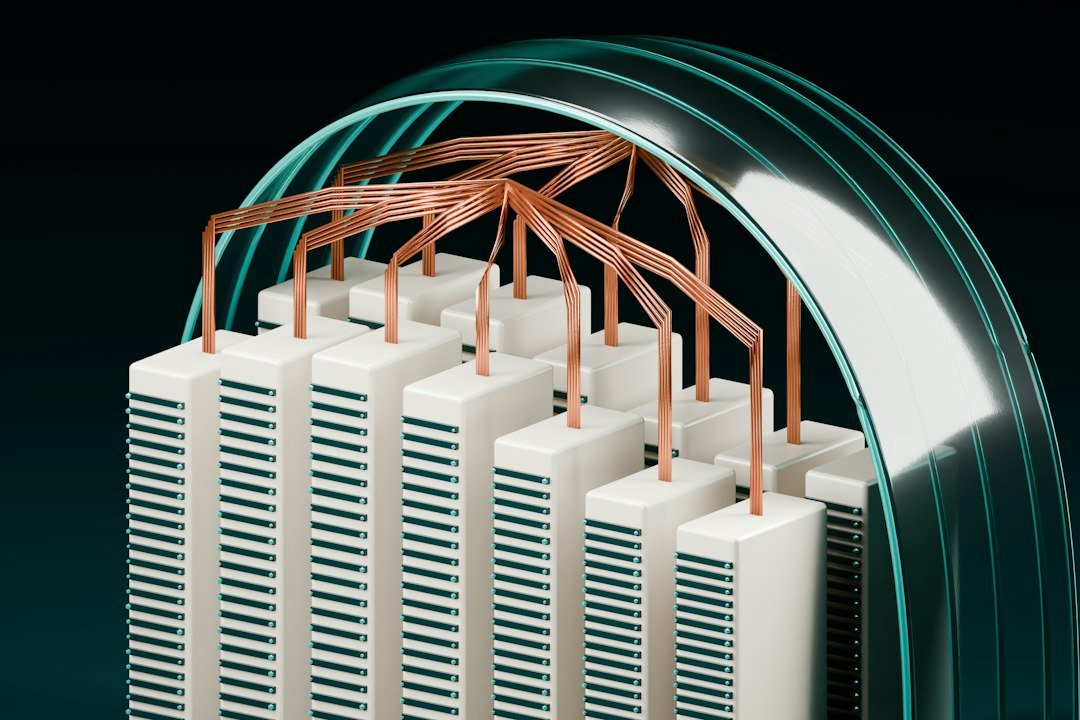
Scheduling becomes an economic control plane
A scheduler decides which queued workload receives which accelerators and when. In a shared AI environment, that becomes a cost and governance function. High-priority production inference may need predictable capacity, while an experimental fine-tuning job can wait. Quotas prevent one project from consuming the entire pool.
KAI Scheduler extends Kubernetes scheduling for AI and batch workloads. HPE says its quota- and priority-based placement can improve utilisation across projects. The code is publicly available in NVIDIA’s repository, but HPE has not provided a universal utilisation gain; results will depend on workload mix, network topology, model software and how administrators set policies.
AI agents add an identity problem
The update also introduces governed APIs and Model Context Protocol services. MCP is a standard way for AI applications to connect to tools and data. HPE says servers can be versioned and controlled by role, tenant and project, with audit logging and machine identities for autonomous agents.
That matters because an AI agent is not merely a user asking for GPU time. It may call internal databases, run code or trigger other services. Organisations need to know which agent acted, which credentials it used and what policy allowed the action. HPE’s announcement describes the control layer; it does not establish that deploying an agent is automatically safe.
Some API capabilities begin rolling out in late 2026, while self-service discovery and credential management are planned for 2027. Those future features should be read as a road map, not current availability. Independent coverage likewise separates the generally available mixed-GPU and scheduling features from the broader agent-governance direction.
Private does not mean isolated from trade-offs
Private Cloud AI is aimed at organisations that want infrastructure under tighter operational, security or sovereignty control. Keeping systems on premises or in a controlled environment can help meet data-location requirements, but it transfers capacity planning, power, cooling, patching and incident response to the operator.
Heterogeneous clusters can improve resource matching, yet they also increase testing complexity. Models may behave differently across GPU generations, and operators must maintain compatible drivers, libraries and performance profiles. A scheduler can allocate scarcity; it cannot make those differences disappear.
The development’s real significance is the shift in bottleneck. Once accelerators are installed, value depends on placement, isolation, identity and auditability. HPE is selling hardware and software for that operational layer. Customers will have to prove the promised flexibility shows up as higher useful utilisation rather than a more complicated rack.
Leave a Reply